Welcome To My AS Media Blog! This is the blog tracking my film opening production for AS Media Coursework. This is a re-submission of work started in September 2016. I have kept many of the original dates, but substantially revised posts, especially adding material on audience, genre and within the evaluation questions.
... POSSIBLE INFLUENCE FOR MY FILM I like the narrative of this film and would like to make a narrative very similar to this. I like the idea of a strong female character getting full on revenge over something so horrible as rape. The main protagonist, Lisabeth Salander, in this film does exactly this, she has been through so much trauma and horrible abuse that when anyone abuses her she wants to get full on revenge on them by abusing them also or killing them. In my film opening, I want to make the killer female just like in this film, so that she can abuse and kill men/women that have abused her. I would also make the victims predominantly male because I disagree with how the character of the ‘scream queen’ in slasher horror films is normally always a female. Also, the fact that the killer would be female, would be countertypical to the slasher horror genre norm of the killer being male.
COMPANIES/IDENTS There are two film idents shown at the start of this film, they are Columbia Pictures (a Sony Company) and Metro-Goldwyn-Mayer Pictures. Sony Pictures is one of the 'big six' conglomerates. Over these idents of this film, non-diegetic music starts playing which can be connoted as very eerie, spooky and child-like. This immediately connotes the genre of the film and sets the atmosphere of the film. This music carries on playing in the film opening until the dialogue has finished between the two characters in the film opening then new non-diegetic music starts playing in the second half of the film opening which is very very different. This new music is in the music genre of rock and is very fast and loud to perhaps connote the action, crime nature of the film. IDENTIFYING ANY PROTAGONISTS
Finally, we get to a character. Being the first character shown would usually connote that this character is the main protagonist, but in this case it isn't like that.
This first character shown is an old male who is on the phone with another old male.
...
This shot of the second character shown is a high angled close up over the shoulder shot. This type of shot connotes that there is some sort of threat and that this character feels weak/is weak. It makes the audience feel threatened and uncomfortable.
...
OPENING SHOT
The opening shot is an extreme long shot of what you can denote as a big lake and forest area in the distance, to establish the location/setting to the audience. There is snow which connotes that it is winter or that this location is somewhere in the northern part of the world. This shot opens in with a fade in. This shot is also a panning shot, this is used to further help the audience establish the location/setting.
... TITLES There are no titles shown until the very end of this film opening. The title sequence accompanies an entire visual sequence and non-diegetic music which heavily connotes the dark genre of the film. There are 19 titles in this title sequence.
The first title shown is 'Columbia Pictures and Metro-Goldwyn-Mayer Pictures Presents'. This is stereotypically the first title you will see in film openings - (main production company/ies presents).
Order of Titles: 1. Columbia Pictures and Metro-Goldwyn-Mayer Pictures Present 2. A Scott-Rudin Yellow Bird Production 3. A David Fincher Film 4. Two Main Actors 5. Main Title: The Girl With A Dragon Tattoo 6. 10 actors names 7. Casting by 8. Costume Designer 9. Co Producers 10. Sound Design by 11. Music by 12. Editors 13. Production Designer 14. Director of Photography 15. Executive Producers 16. Produced by 17. Based on the book by, Originally Published by 18. Screenplay by 19. Directed by
MISE-EN-SCENE FOR EXPOSITION NARRATIVE Barthes’ narrative enigma can be applied in this film opening.
SOUND/GENRE SIGNIFICATION
Over the film idents of this film, non-diegetic music starts playing which can be connoted as very eerie, spooky and child-like. This immediately connotes the genre of the film and sets the atmosphere of the film. This music carries on playing in the film opening until the dialogue has finished between the two characters in the film opening then new non-diegetic music starts playing in the second half of the film opening which is very very different. This new music is in the music genre of rock and is very fast and loud to perhaps connote the action, crime nature of the film.
SHOT VARIETY
There is a lot of use of extreme long shots in this film opening because the director wants the setting to be clearly established to the audience. The second shot is of a house connoting that the shots are cutting closer to finally get to someone as you can see in the next shot. So, there are two shots until we finally get to shot of a character.
... COMPANIES/IDENTS There are three film idents shown at the start of this film opening. These are 'Universal Pictures', 'DreamWorks Pictures' and 'Reliance Entertainment'. 'Universal Pictures' is one of the 'big six' conglomerates. There is an audiobridge of train sounds over two of these idents of this film. The train sound slowly build up until the opening shot where the sounds are at full volume. This connotesthat the film has suspense and that it is a thriller. We hear the train sounds until the title swipes in harshly.
OPENING SHOT
...
...
...
TITLES ... You can denote that the titles in this film opening are very minimal and simplistic. They have a white sans serif font which connotes drama. The main title of the title sequence is rather small
...
...
IDENTIFYING ANY PROTAGONISTS SOUND/GENRE SIGNIFICATION There is an audiobridge of train sounds over the two film idents of this film. The train sound slowly build up until the opening shot where the sounds are at full volume. This connotes that the film has suspense and that it is a thriller. We hear the train sounds until the title swipes in harshly. SHOT VARIETY There is a variety of shots used, including extreme long shots, long shots, close ups, medium shots and NARRATIVE Barthes' narrative enigma can be applied in this film opening through the opening shot, how it's of a train going past very sharply. This foreshadows and connotes the psychological thriller genre and suspense of the film. On the other hand, exposition is being provided here because the main protagonist is speaking in a voiceover. MISE-EN-SCENE FOR EXPOSITION There is a medium close up of a train passing by very quickly here. The fact that the train is shown first is to connote that the train is the main signifier of the film, the most important element of the film. Also, the fact that the train cuts in very fast in the opening shot and the train sound all of a sudden gets very loud in this opening shot connotes the atmosphere and mood of the film: suspenseful, thrilling.
COMPANIES/IDENTS There are three film company idents shown at the start of this film opening: Universal Studios, Gary Sanchez Productions and On The Day Productions (shown in this order). When the third film company ident is shown, non-diegetic music starts playing (Captain and Tennille – Love Will Keep Us Together). You can denote that this is upbeat non-diegetic music and that it connotes the comedy genre. Gary Sanchez Productions is operated by Will Ferrell (American comedy genre actor) and Adam McKay connoting that the film is of the comedy genre. On The Day Productions was made by Melissa McCarthy (main comedic star of the film) which connotes that the film is of comedy genre. This tells the audience that Melissa McCarthy was involved in making the film.
TITLES The titles in this film opening appear in this order: 1. 1975 2. 1980 3. 1985 3. Universal Pictures Presents 4. An On The Day/Gary Sanchez Productions production 5. Main Title: The Boss It is common to see the main title at the end of the title sequence. IDENTIFYING ANY PROTAGONISTS The first character is shown in the opening shot (medium shot), in the film, this connotes that she is the main protagonist.
A bit later on in the film opening, we see the same character grown up. The first shot we see of her like this is an extreme long shot of her standing on a golden bird being lifted down.
SOUND/GENRE SIGNIFICATION The non-diegetic music that started playing during the third company ident, carries on playing throughout the first half of the film opening. The dialogue after this tells the audience that she is being sent back to the foster home because the guardian doesn’t want her anymore. After this dialogue the setting has changed again to a different time period, same place, another car pulls up outside, a new song played (1980) connoting that she is being sent back again after finding a new family. The protagonist grows up through these changes. Then, this happens again 5 years later (1985) with a change in song again and there is swearing from her connoting that she thinks she will never find a home and she is done with being fostered/adopted (never works out for her). The lighting slowly keeps getting brighter every time she ends back there connoting that things are getting better and the main character knows this and starts to see hop that she will end up at the top one day (inspiration for big dreams when she is older that everything will be great then). Michelle says ‘Families are for suckers, don’t worry about me, I don’t need anybody, I’m going straight to the top”. This narrative enigma tells the audience that this main character has had problems when she was young and that is the reason she is the way she is when she is older- arrogant, selfish, independent, a lone ranger, money endorsed. SHOT VARIETY NARRATIVE MISE-EN-SCENE FOR EXPOSITION
The low key lighting used connotes sadness. The film starts with going back in time to 1975 as the text appears to inform the audience we have gone back in time. The lighting is low key connoting sadness and gloom (that the past was bad). So far no conventions of comedy genre. The car connotes this time period also. Long shot of building. It says the building is ‘The blessed sisters of mercy’ connoting that it could be a foster home. There are diegetic sounds now aswell as non-diegetic sound.
The first person who is shown in close up/mid shot is the protagonist this is connoted from how she is the first character shown (Michelle Darnell- Melissa McCarthy young). The low key lighting connotes sadness. The dialogue after this tells the audience that she is being sent back to the foster home because the guardian doesn’t want her anymore. After this dialogue the setting has changed again to a different time period, same place, another car pulls up outside, a new song played (1980) connoting that she is being sent back again after finding a new family. The protagonist grows up through these changes. Then, this happens again 5 years later (1985) with a change in song again and there is swearing from her connoting that she thinks she will never find a home and she is done with being fostered/adopted (never works out for her). The lighting slowly keeps getting brighter every time she ends back there connoting that things are getting better and the main character knows this and starts to see hop that she will end up at the top one day (inspiration for big dreams when she is older that everything will be great then). Michelle says ‘Families are for suckers, don’t worry about me, I don’t need anybody, I’m going straight to the top”. This narrative enigma tells the audience that this main character has had problems when she was young and that is the reason she is the way she is when she is older- arrogant, selfish, independent, a lone ranger, money endorsed.
All of a sudden there is a dramatic change of scenery and the setting is in the future. There is diegetic sound of hands clapping and cheering and a voice on loudspeaker to an audience speaking about a woman (Michelle Darnell). This really surprises the audience that what she said when she was young was true she would make it to the top. The setting is at night in Chicago (big city at night connotes fame, power, money, glamour). There is high key lighting now (conventions of comedy now). The shot is an extreme long shot zooming in on the arena building with posters of Michelle Darnell on the outside walls connoting she has a sort of concert/live show about her life. Then there is a sudden extreme long shot of the inside of the arena and music starts playing (‘All I Do is Win’) connoting fame and power that she is a really famous, wealthy woman now. Her entrance into the scene is a long shot of her coming in on a flying bird saying "Who wants to make some money!". Again, giving the impression of extreme wealth and fame, presenting her as powerful and strong and an idol. She is making a very strong statement. Her facial expression and body language and position of reaching up with a finger connotes power, arrogance and selfishness. The money falling down around her connotes that she is extremely wealthy and famous. The entire audience claps and cheers for her after this point connoting that everyone loves her and admires her. The audience watching the film have been told by the protagonist, the setting of the film (Chicago).
She keeps the audience on track and gives a basis of the storyline of her life. There is a lot of symbolism in her speech of how broken she is deep inside and that’s why she is so selfish, full of greed, revenge and anger because she has no one, everyone left her so she had to find her own way in life without any support or help. It is like a huge comeback for her to prove she can make it on her own with no one in the way. The camera angles (low angle, side angles, zooming in and out) try to present her as powerful and famous and to be looked up on making the audience think so too. Then a new song starts playing after her speech to the audience, which is an up beat, full of greed, arrogant song (Eve – Tambourine).
There are now fast cuts with shining lights between shots. This connotes fame and big lights and cities at night. All the shots are of the city at night with the film companies’ names in gold (connotes fame, gold, money and royalty). This is not common for the conventions of comedy, especially set at night, with a gold, royal, serif font.
For this film opening there is a lot of non-diegetic music. When we finally start to see the titles, the song Eve - Tambourine starts playing, this song denotes happiness, hip-hop, rap and dance. This song works very well at connoting the genre of comedy and narrative of the story. Also,non-diegetic sound in comedies can also give emphasis on many scenes. Other than non-diegetic sound, during the second scene of the film opening where we see the main protagonist grown up, on a stage with a whole audience screaming for her, she starts rapping then for a bit to the song 'All I Do Is Win' (this song connotes the narrative very well and represents what this main protagonist is all about) then after the song has finished she starts speaking dialogue, it is very clear to make sure that it be can heard and laughed at (stereotypical of comedy genre).
... COMPANIES/IDENTS
... There is only one film companyident for this film and it is Universal Studios, one of the 'big six' conglomerates. You can denote that an additional object has been added to the ident which is from within the film, Oblivion, (The 'Tet'). This denotes the sci-fi genre immediately. Non-diegetic music starts playing here. You can denote the music as being slow, quiet strings. This connotes sadness and nostalgia. The 'Universal' font is not the normal gold colour, you can denote cracks, worn out rusty silver metal further connoting the sci-fi genre and denoting the setting (post apocalyptic earth - the world has been ruined). OPENING SHOT
The opening shot is a long shot/extreme long shot with a sepia colour effect to connote that this is set back in time. The camera zooms in on the binoculars object connoting that this is an object of significance, that something happened here with the binoculars.
NARRATIVE Many narrative theories can be applied here in this film opening such as Roland Barthes' 5 codes. This includes the enigma code, the action code, the semantic code, the cultural code and the symbolic code. The enigma code is relevant here. This is seen within the very start of this film opening. The opening shot of the binoculars at the top of the empire state building reveals that something has happened there because of the sepia colour effect used and the camera movement of zooming in on the binoculars. This all creates and builds suspense/mystery. The audience wants to know what happened in this place and why the binoculars and the setting are of significance. IDENTIFYING ANY PROTAGONISTS
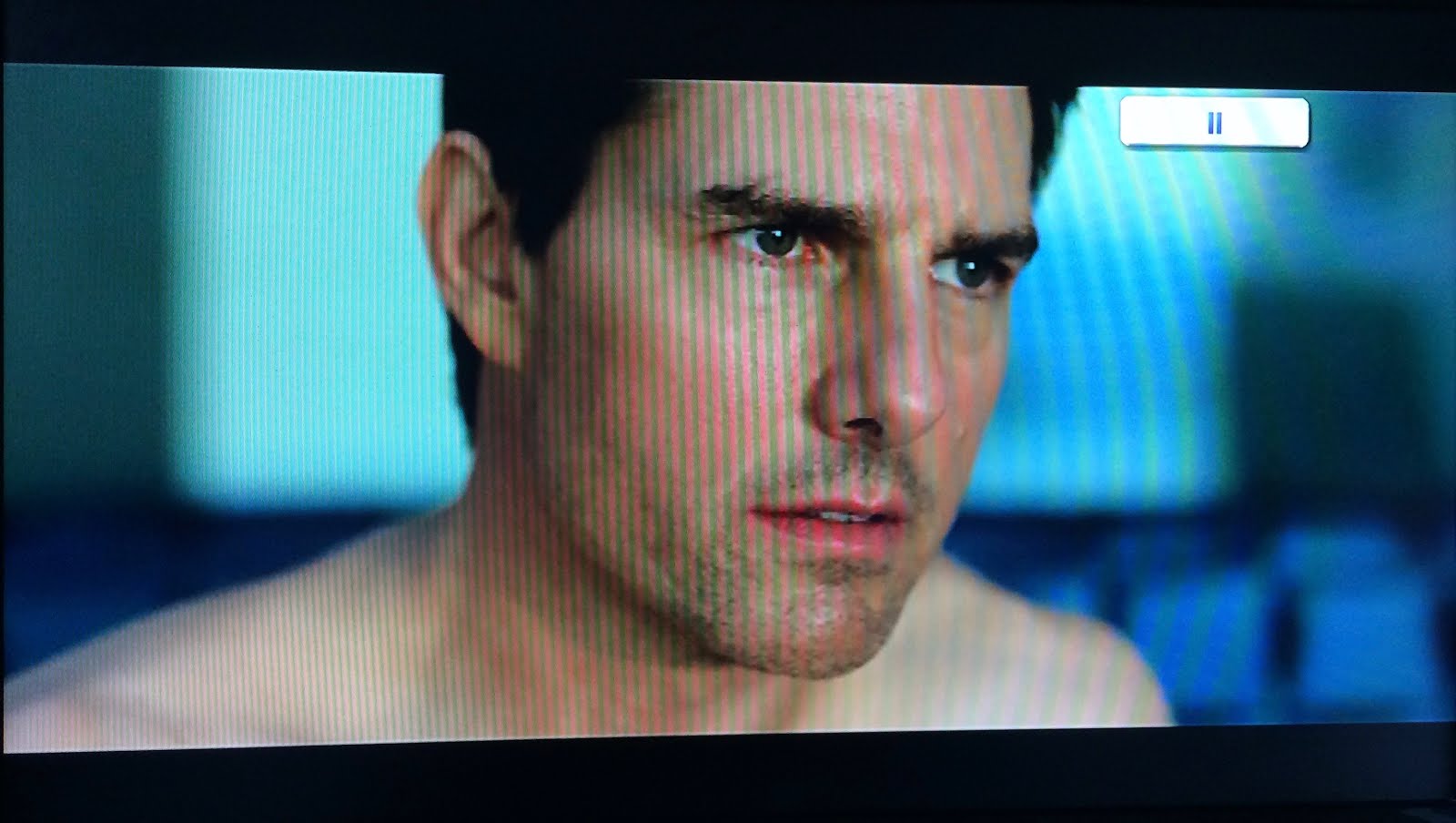
The first character shown is Tom Cruise, high star billing actor who is in many sci-fi, action films e.g. ‘War of the Worlds’ and ‘Mission Impossible’. This connotes that he is the main protagonist of the film. He is the one speaking in a voiceover throughout the film opening, this provides exposition for the audience. This shot is a low angled medium shot which is in a 360 degree angle movement.
The third shot of the film is a medium shot of another character. The fact that she is shown second connotes that she is the second main protagonist. This shot follows the shot of the main protagonist, Tom Cruise's character. You can denote that these two characters are gazing at each other intimately from far away in a crowd. This connotes that they have a close relationship. The sepia colour effect is still being used so this connotes that this scene is from the past.
A little bit later on in the film opening, a third character is shown, this connotes that she also has some importance in the film (perhaps third main protagonist). It is also connoted that there is clearly some close relationship between the main protagonist and this character from the fact that they are waking up in bed together, later on in the film opening. The two women in the film connote that there is a love triangle with the main protagonist (Tom Cruise).
SOUND/GENRE SIGNIFICATION Tom Cruise's character speaks in a voiceover throughout the film opening, this is diegetic sound. It provides exposition for the audience - describing the situation (what has happened to earth, who he is, what he does, his thoughts). There is also non-diegetic music playing throughout the film opening which can be denoted as piano, high strings and electronic synths. The notes are held for a long time which connotes some suspense and romance.
MISE-EN-SCENE FOR EXPOSITION The main character wakes up from this ‘dream’ of the past. There is normal high key lighting now connoting he is back in the present.
TITLES
The only title that appears in this film opening is the main title of the film, 'Oblivion'. This title has a sans serif font and can be denoted as being light blue, digital and glass-like. This has strong sci-fi genre connotations.
SHOT VARIETY
There is a variety of shots shown throughout this film opening, including especially, extreme long shots and long shots which clearly establish the setting to the audience (this is important especially for the sci-fi genre) which is post-apocalyptic Earth. Since Tom Cruise speaks in a voiceover throughout the film opening while extreme long shots appear on screen, this provides a lot of exposition for the audience. The opening shot is a long shot which establishes a setting to the audience (top of Empire State Building). We also see use of close ups and medium close ups on the characters throughout the film opening, these are used to show the character's emotions and their upper body actions. There is also use of close ups on digital, sci-fi, futuristic objects such as touch computer screens, futuristic shooting weapons and robotic drones; all stereotypical of the sci-fi genre. These shots are used to clearly signify the sci-fi genre to the audience.
Finally, a long shot of the setting of where the main character lives with the third main character. This shot also mainly shows the main character going off to do his job to go and fix the drones down on earth. The music (non diegetic sound) turns very dramatic and all of a sudden loud (crescendo) for the title appearance. There is a sci-fi, high-tech, light blue, metallic font which connotes the sci-fi genre very well.
The conventions of sci-fi are binary opposition between who ruined the world and the left survivors. Tom Cruise is the hero who saves the world and the human population from drying out/being killed by the robots (drones)/aliens; We don’t see this is in the film opening because that is yet to be revealed that the jobs they have are coming from the aliens not the human space station in space. They had their memories wiped so they don’t remember about life before this where they are now. That is why the title is called ‘Oblivion’ because the aliens take advantage of this oblivion but yet still Tom Cruise has some slight memories of life before the ruin/war to be able to save the world. The 'Tet', in space, where the aliens are controlling these two humans is black to connote evil and Tom Cruise down on earth, wears white. Also the film is set in the future 2077 on a post apocalyptic earth which goes with the sci- fi conventions. Also many futuristic props, houses, robots and clothes are used in the genre of sci-fi which are majorly in this film. Also, the main character is male and one of the main stars including a survivor human leader of the remaining humans hiding from the aliens (Morgan Freeman)- both males connoting the sci-fi genre also.
COMPANIES/IDENTS ... There is only one film company ident shown in this film, which is 'Miramax', an indie film company. A few years later after this film was made, Miramax was then bought by Disney, therefore becoming a subsidiary. Disney is one of the 'big six' conglomerates.
IDENTIFYING ANY PROTAGONISTS
... The opening shot of the film is a medium two shot that introduces the two main characters of the opening scene (a couple having a conversation while eating breakfast). The male character is smoking and lying back with his leg up and foot on the chair signifying non-conformity, this and his use of swearing connotes that he is rebellious. The female character is sitting up straight connoting that she is a nice, polite and respectful contrast to the male character. This connotes that she may be less rebellious and cares more about seeming polite in public situations than the man does. There is also use of high key lighting. Usually, the first characters shown in a film are the main protagonists. However, in this example, the first two characters are not the main protagonists.
SOUND/GENRE SIGNIFICATION There is continuous diegetic sound of a café throughout which can be denoted as traffic sounds (car noises) and muffled background conversations. These sounds remain the same throughout this entire scene in the diner, which connotes a relaxing atmosphere. There is also diegetic sound of dialogue between these two characters which provides the audience with some exposition - that they are criminals therefore signifying/connoting the genre immediately as being crime, gangster.
A normal couple eating in a diner goes against the conventions of a gangster genre film. This film opening is very countertypical to the stereotypical gangster film opening you would see. The setting here (a café) is very countertypical for the gangster, action, crime genre of the film. Stereotypically, the gangster, crime genre includes dark hoods, guns, weapons, thugs and is usually set at night time in shady, run-down areas such as the place now termed as the 'ghetto'. This goes against the brightly lit daytime scene we see here in this film opening. At the end of this film opening, the man pulls out a gun and slams it on the table which gives a harsh contrast to the relaxed, calm environment before and lets the audience know that they are serious about robbing the diner. Then they kiss each other and the man stands up while the woman turns and hides her face connoting that the man is the dominant figure in the shot, and in the criminal relationship.
SHOT VARIETY
There is some variety of shots throughout this film opening. The opening shot is very countertypical to the usual opening shot you would see; it is a two shot of two characters sitting at a table/booth in a café. Usually, you would see an extreme long shot as the opening shot, because this establishes the setting to the audience. This two shot consists of dialogue between the two characters.The audience is made to feel uncomfortable while watching this film opening through the use of long takes which are then broken by the use of close ups. An example of this is within the opening shot, this is a two shot of the two characters sitting at a table in a cafe in a conversation. This opening shot also has a very long take (35 seconds) which is then broken by the use of a close up on the waitress's face. This makes the audience become aware that they need to focus on the waitress only so they can see her facial expressions, connoting that there is something wrong that the waitress has picked up on. Another example of this is when the couple are in conversation in a two shot then this gets broken by the use of a medium close up on the female character. This makes the audience focus on her emotions and facial expressions.
There is use of two shots, close ups, medium close ups, 'dirty' and 'clean' over the shoulder shots, medium shots, medium long shots. The two shots are used here to connote that there is a relationship between the two characters in the scene. The 'dirty' over the shoulder shots are used in the conversations between the two characters as part of the shot reverse shot sequence, alongside the 180 degree rule. Since the 180 degree has been applied, there is continuity editing. Further into the film opening, the shots on the character's faces talking start to have shorter takes connoting that action and drama is coming and that the couple are serious about robbing the diner right now. NARRATIVE Many narrative theories can be applied here in this film opening such as Roland Barthes' 5 codes. This includes the enigma code, the action code, the semantic code, the cultural code and the symbolic code. The action and enigma codes are relevant here. At the start of the film opening the enigma code can somewhat be applied because the audience have just started on these two characters and have no idea what is coming; the dialogue of these two characters provides a lot of exposition for the audience however. The enigma code can also be applied when the characters are on the topic of robbing the diner, this creates and builds suspense for the audience wondering if they will actually do it and when. At the end of the film opening, the action code is evident when the male character slams his gun onto the table and then the couple stand up and hold up their guns yelling at all the other people in the café. Also, Propp's 7 character archetypes can be applied here. These include the hero, the princess or prize, the donor, the dispatcher, the helper, the villain and the false hero. In this film opening you only see two characters so not many of these archetypes are shown. MISE-EN-SCENE FOR EXPOSITION You can denote that the female character here is wearing a silver necklace, a purple conservative dress and has short light brown hair with a fringe. She is also sitting with her back straight at the table (no slouching or putting her feet up). From this combination of things you can connote that she is quite a polite, respectable character. Through the dialogue and actions at the end of this film opening, we realise that she is actually a criminal. However, at the end of the film, we realise that she is actually not, she is only acting like one because her boyfriend is. She crumbles and breaks down, showing her true fear and weakness, when Samuel L Jackson's character talks with her as he has her boyfriend at gunpoint. When the waitress comes over to pour more coffee into the female character's cup, the female character gratefully accepts the coffee and starts acting overly friendly to the waitress. To the audience, this connotes that with strangers, this woman is not her usual self but instead trying to appear as an overly polite woman. She wants it to appear as if everything is perfectly fine and polite at the table, that there is no talk of crime. This all connotes that this woman is actually cautious of committing crime unlike her partner. The male character is wearing a relaxed summery beach buttoned shirt. It is light blue with patterns on. The collar is undone. He also is wearing light blue denim jeans. This connotes that he is a rebellious and relaxed character. The lighting and background diegetic sounds remain the same throughout the entire film opening in the diner connoting a relaxed, nothing out of the ordinary environment. The audience believe that nothing dramatic is going to happen, they are just listening to what the male character has to say about crime (the conversation between the two characters). The man appears to be trying to convince the woman to do all these things he is talking about with him but she acts calm and gentle (the opposite of him - binary opposition). As the man mentions the possibility of having to kill someone, the woman sweetly reacts by smiling saying “I’m not gonna kill anybody” which is strongly against the conventions of the gangster, action, crime genre but also against the conventions of a couple having dinner together.
At this point, the climax of the opening scene, all of the built up ideas about the character of the woman are dismissed. She quickly goes from her position of sitting down at the bottom of the frame, to standing up waving a gun wildly around, with an angry face, screaming obscenities. This is not what the audience would have expected when the man suggest she handle “crowd control” in the scene before. The diner scene ends with a freeze-frame of the woman pointing the gun, with the credits beginning to appear at the bottom (film institution – ‘Miramax’). The theme song starts (gangster, action, dramatic, cool song) with all the film credits coming afterwards- another film institution, the director’s name, title of film in bold large font- yellow and orange. The actors’ names appear after this one by one on top of the film title ‘Pulp Fiction’ in yellow as it decreases in size behind the actors’ names. Then more credits appear in yellow this time, with a change of song (non-diegetic sound).
TITLES With a fade in, the second frame is a still shot of the definition of pulp, written in a dictionary style font. It is clear that the second meaning is relevant here, as it sets the tone of the film immediately. The fact that this definition is shown at the start, connotes that the director, Quentin Tarantino, wanted this definition to be kept in mind while watching the film. There is no non-/diegeticsound in this frame. The frame then fades out. The second set of main titles appears at the end of this film opening on the final shot. The first title shown is 'Miramax Films Presents'. This is stereotypically the first title you will see in film openings - (main production company presents).
 Friday The 13th